EU vs. Germany: Who Will Return Money to Players from Illegal Casinos
EU vs. Germany: Who Will Return Money to Players from Illegal Casinos
One of the most important legal cases for the entire iGaming industry is brewing in Europe. We are talking about the case C-530/24 (Tipico v. the player), which is now being considered by the Court of Justice of the European Union. And if the final decision confirms the current position of the general counsel, the consequences could be large-scale - up to billions in payments.
The essence of the situation is that Germany has been in the gray zone of online gambling regulation for a long time. Operators worked, but could not get a full-fledged license due to problems in the regulatory system itself. And this has now become a key factor in the dispute.
The Advocate General of the Court of Justice of the European Union formulated two fundamental conclusions that actually create a "fork" for the German authorities.
The first is that if the operator did not have a German license at the time of accepting bets, then the contract with the player is considered invalid. This means that the player has the right to demand the return of lost funds. This is already being actively used in the courts of Germany, where players are filing lawsuits against operators en masse.
But there is a second, much more painful moment. If the operator could not obtain a license through no fault of its own, but due to systemic failures in regulation, and at the same time the state actually turned a blind eye to its activities, then the fault does not fall on the company.
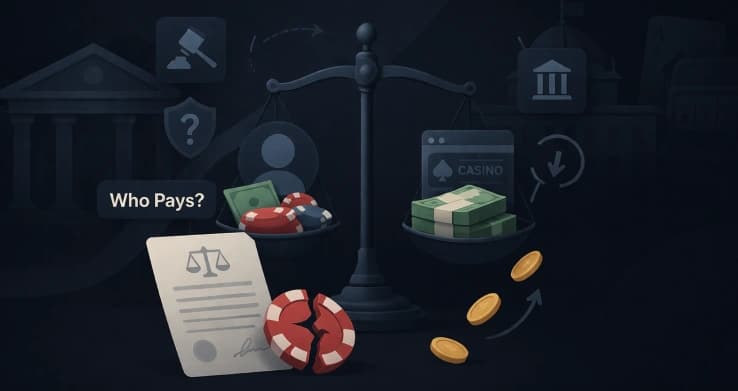
And this is where the most interesting begins. If the contract is invalid, but the operator is not to blame, who should return the money? According to the logic of the advocate general, the responsibility may fall on the state, that is, on the German budget.
This puts the market in an extremely uncomfortable position. On the one hand, there is the protection of players and the right to a refund. On the other hand, there is a potential burden on public finances, if the court recognizes that it was the regulator that made a systemic mistake.
If the Court of Justice of the EU upholds this view (which happens in about 80% of cases), major operators such as Tipico, Bet365 and Bwin will be able to fend off mass lawsuits by citing errors in German regulation. And then the wave of demands may turn not to companies, but to the state.
The final decision is expected in the next 2-4 months. And regardless of the outcome, this case will set a precedent that will affect not only Germany, but the entire European online gambling market.